At first I was going to call this article, “How I Used Ikigai to Build My Writing Career,” but calling my writing a “career” feels a bit pretentious because I don’t earn much from my writing. However, I’ve also published over ten books that do sell, so I’m not sure what to call it.
I am fond of the term “a creative practice that occasionally earns money,” but that’s a bit…long.
Yet, when I think about it, that kind of definition of what I do fits with the spirit of the Japanese concept of ikigai. Although the “ikigai” diagram (which is not Japanese, BTW) is often used to help narrow down career paths, I feel like the real goal is to shine a light on the practice of living that fits best with where you currently are. It’s about connecting your current reason for being with what motivates you to get out of bed every day.
Your ikigai can change as you go through life, and the associated purpose diagram can be a way to discern what your focus truly is when life gets messy or when creative ideas overwhelm you. This is my first time sharing this but—for me, using this diagram to focus on my purpose has reliably been the source of my best work. I’ve been using this framework for many years now, and every time I use it as a compass, my creative body of work finds its center. It just changes the game, every time.
The downside of following my ever-changing reason for being is that my work fails to match neatly with online business mechanics, which means earning can get complicated.
Online businesses typically rely on:
- frequency
- repetition
- loudness
- having a steady identity (a steady identity is marketable)
- algorithm friendliness
…to be financially successful. Even if you’re not loud and have a soft, introvert friendly business, if you’re not repetitive and have an evolving reason for being as your online presence, be ready to struggle.
My work fights against repetitiveness because following one’s purpose tends to function like a snake shedding its skin. When I first started with the diagram, it was like standing at the top layer of my purpose. But once that purpose was fulfilled and satisfied, then a deeper layer was revealed, and then a deeper one under that.
So as a result, my earlier work follows the common “how-to” and problem solving posts that are normal for online creatives who are trying to meet a need and provide a service. But as my connection with my purpose deepened, the more intuitive shadow side of things began to show, and at that depth, trying to consciously figure out who I’m helping became murky although I know that my work is helpful to…someone.
My work cannot be tied up neatly. Also my business identity isn’t neat either. I went from being the personality type and productivity writer, to the HSP writer, to the shadow work writer, to the fiction and nocturnal dreams writer. My topics keep evolving.
Add to that, more recently my purpose psychologically broke away from external measures of success completely because when you’re following your ikigai, the trajectory of your purpose becomes the center, regardless of if society rewards it or not. It shifts to being more about the daily joys of living than accomplishment.
Going back to that diagram, depending on who you are, you might also find that the vocation and profession aspects may be more of a slow burn than something that can earn quickly.
For me, work that comes from my purpose isn’t always SEO friendly but then there is just something about it that warps what is expected. It just has its own kind of magic. At least, that has been my experience. Not sure if I can explain it fully in this post, but I’m going to try.
How I Got Started With Understanding My Ikigai
So I had moved on from my previous blog, Manga and Mascara, and I was busy wrangling with life.
After a series of missteps in trying to create my own business and working in retail, I was fortunate enough to land a stable office job. Being in a place where my work was predictable gave me the mental space I needed to look back on where I had gone wrong.
When I was trying to figure out how I could earn money from my creative work, I had tried so many things—from portrait art to publishing a short nonfiction book about taking care of curly hair to creating stationery. I cycled through so many things! You can get an idea of how many things I tried from this post where I reflected on this period of my life: How to Decide on a Business Idea When You Want to Do Everything.
During that time I came across the idea of being a multipotentialite and polymath. I read books like Refuse to Choose and so on. Then one day while browsing Pinterest, I came across a pin from an article about how to create one brand when you have many passions and the worksheet from that article introduced me to the concept of ikigai. I must say that in hindsight, the business advice from that post is very solid.
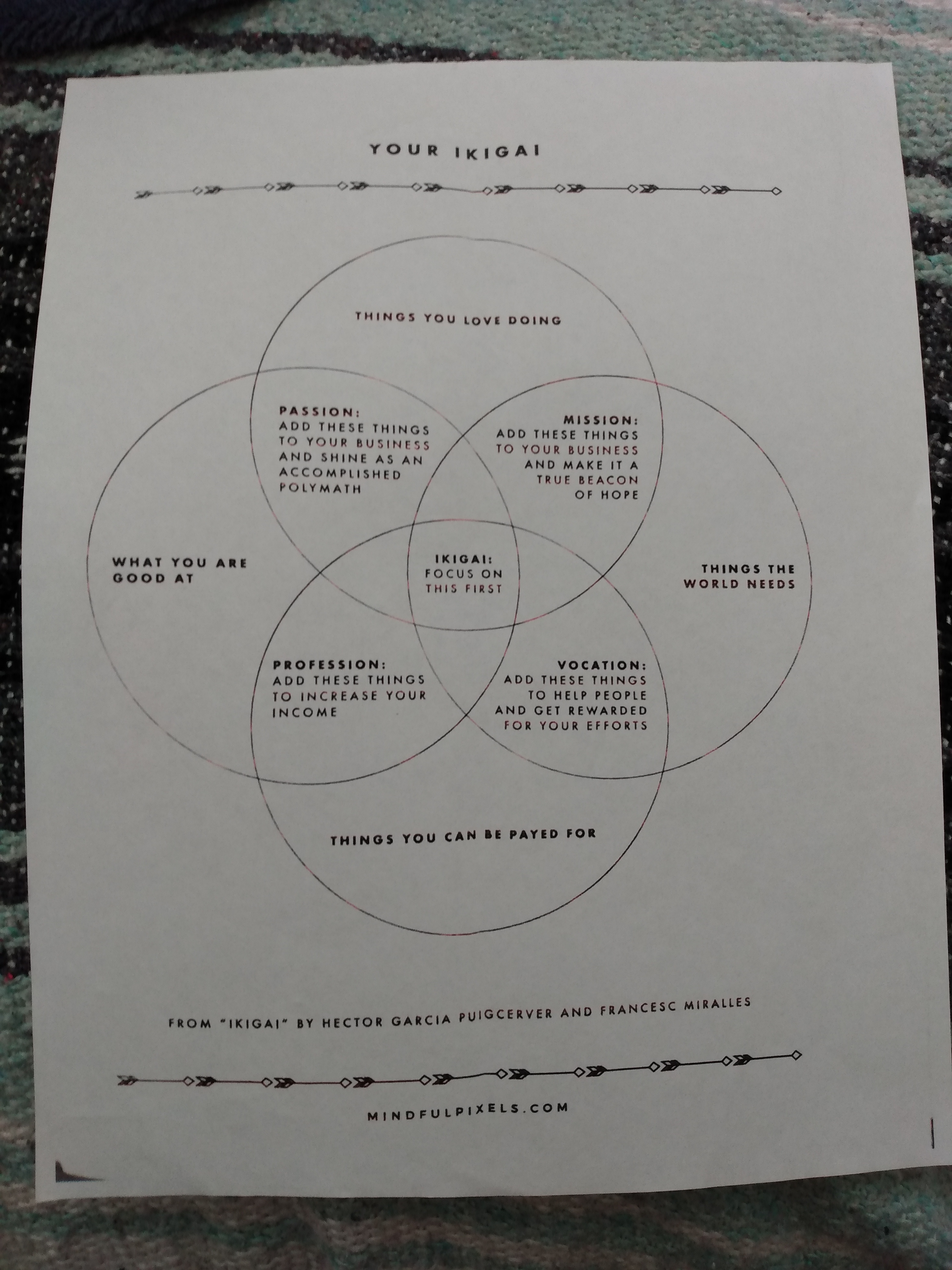
Thanks to this discovery, I was able to focus my wandering mind for years on a single topic that felt fulfilling, and that helped me to rebuild my online presence and recover from the creative burnout I was dealing with after wrapping up my webcomic.
I filled out the worksheet and discovered my first “ikigai” in early 2018:
Writing to help INFPs and those with similar traits navigate the world.
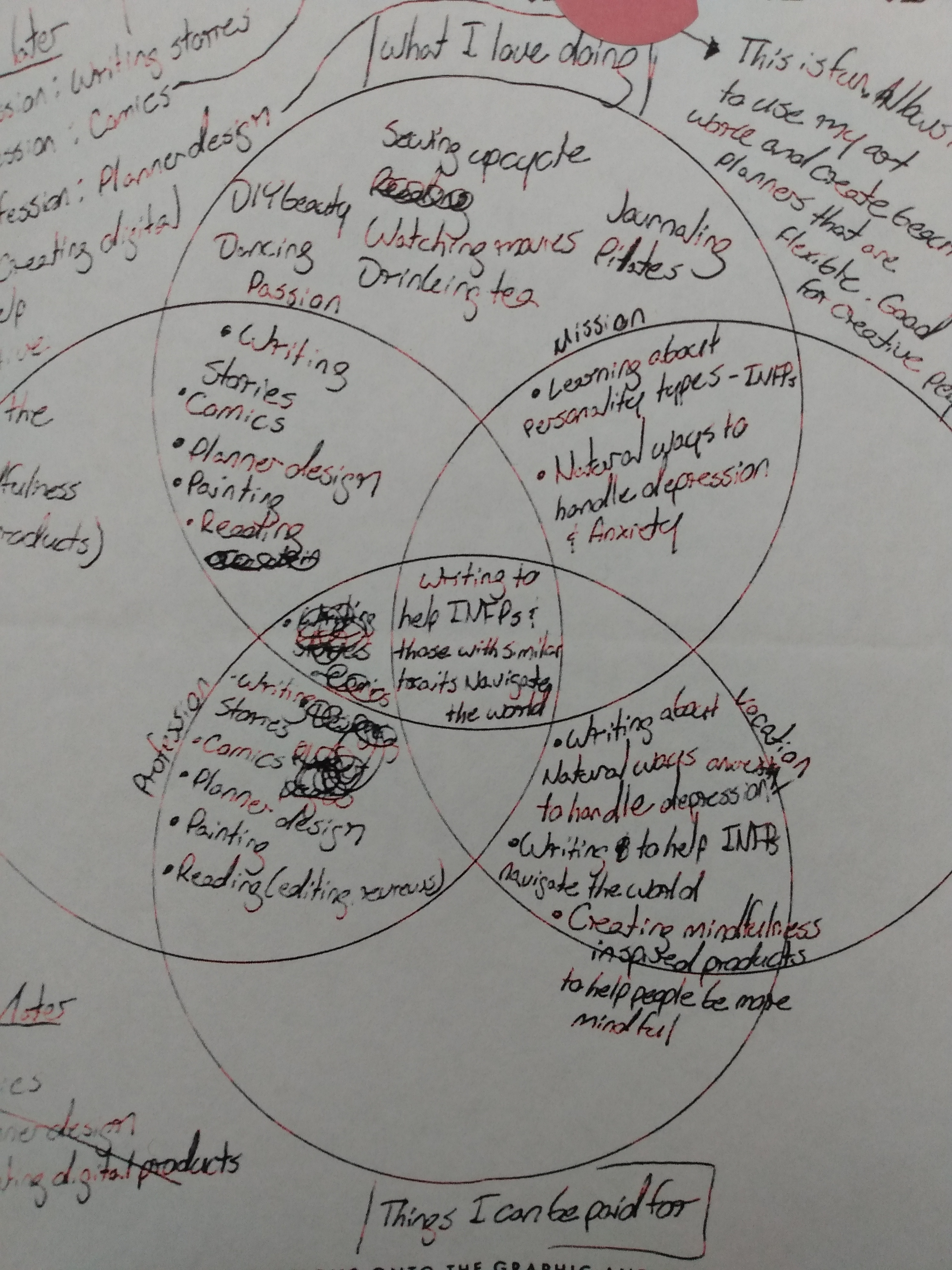
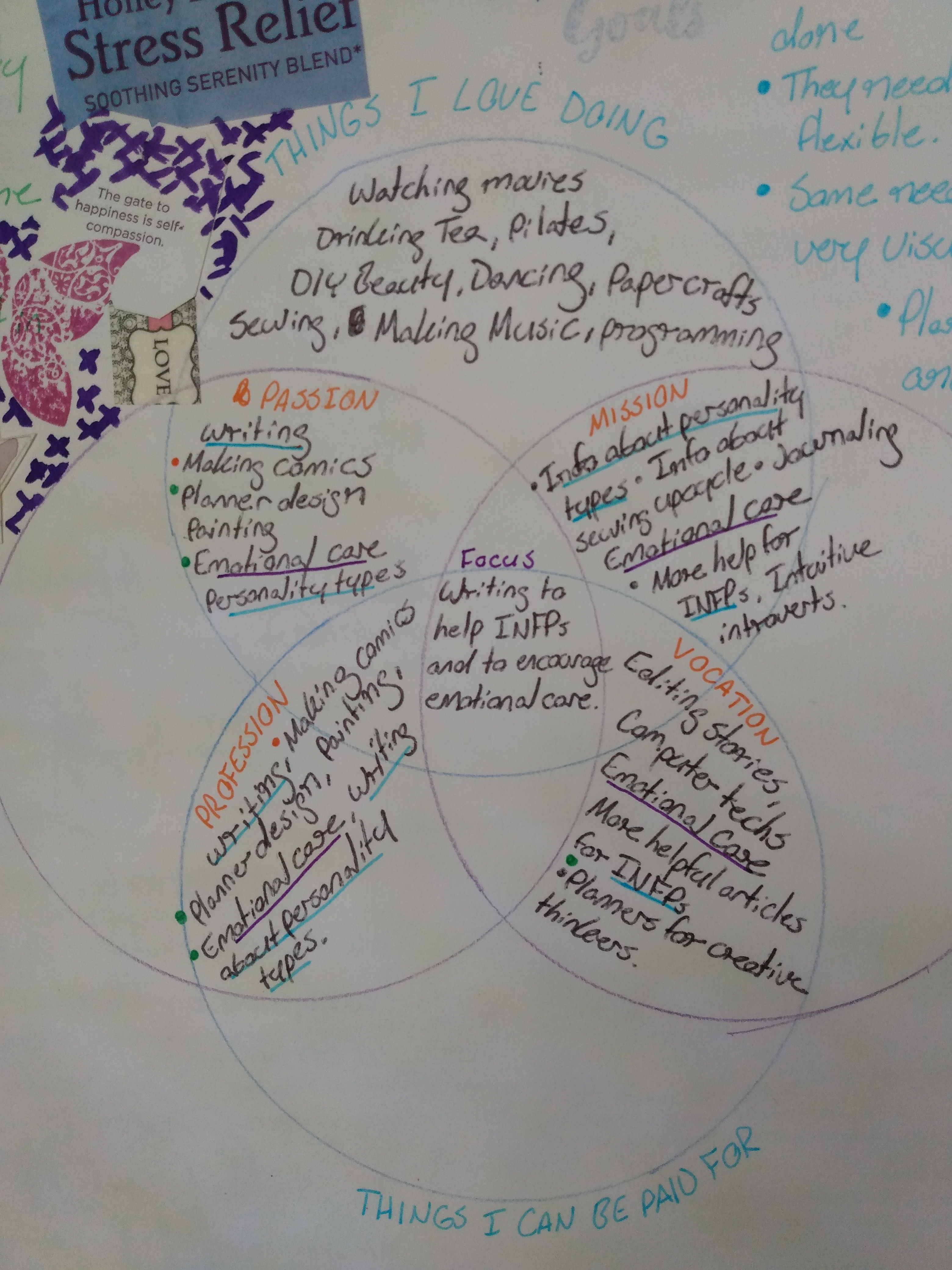
I loved the process so much that I repeated it in an art journal that I was using to plan my creative business. So I ended up with a second point of focus for 2018:
Writing to help INFPs and encourage emotional care.
It was my deep digging into the MBTI mechanics of my type that led me to exploring the ideas of being multipassionate and highly sensitive in the first place. Also I was deep into bullet journaling, productivity, and planners, not only to organize my time but also to give myself space to handle my battered mental health.
So with my new found focus, I got to work.
By June of 2018 I was working on my book Idealist Dreams: How I Learned to Plan as an INFP. Then in 2019 came I Want to Do All the Things and I Can’t Help Being an INFP Writer.
In 2021 came Thoughtful Planning and on the heels of the onset of my chronic pain came Tiny Tasks.
My “ikigai” of 2018 helped me to create my highest earning collection of books. Even today, these are the books that sell the most for me.
However by the time 2022 came around I was feeling like my enthusiasm was waning. Even the blogger who introduced me to all of this had decided to move on to something new.
Purpose isn’t permanent. It’s a living relationship between self and life.
Going a Layer Deeper
I thought that if following my ikigai could help me get started with a creative business, it could also help spice up a space that was feeling a bit boring. So in 2022, I rediscovered my ikigai. This time it was:
Writing about how INFPs and HSPs (Highly Sensitive People) can embrace their intuition, need for mental space, and get more done via anti-hustle.
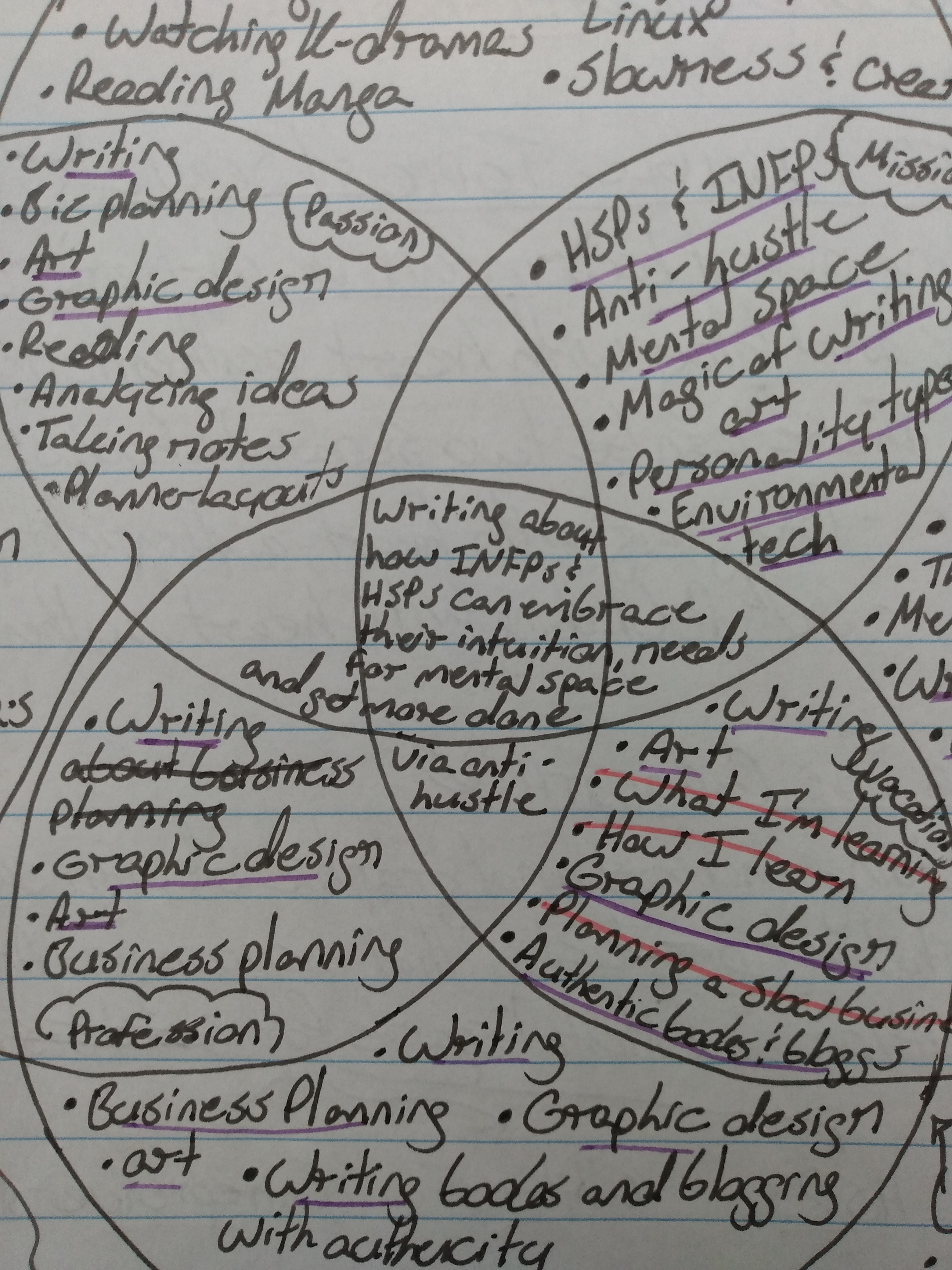
I wasn’t quite satisfied with those results, and I was curious about what my current reason for being could be without the narrow focus on personality type. So a little while later I did it again. This time my point of focus for 2022 was:
Illuminating blind spots, bringing wounds and pain to the surface, finding lessons, and overcoming them. Self-reflection, writing, journaling, storytelling.
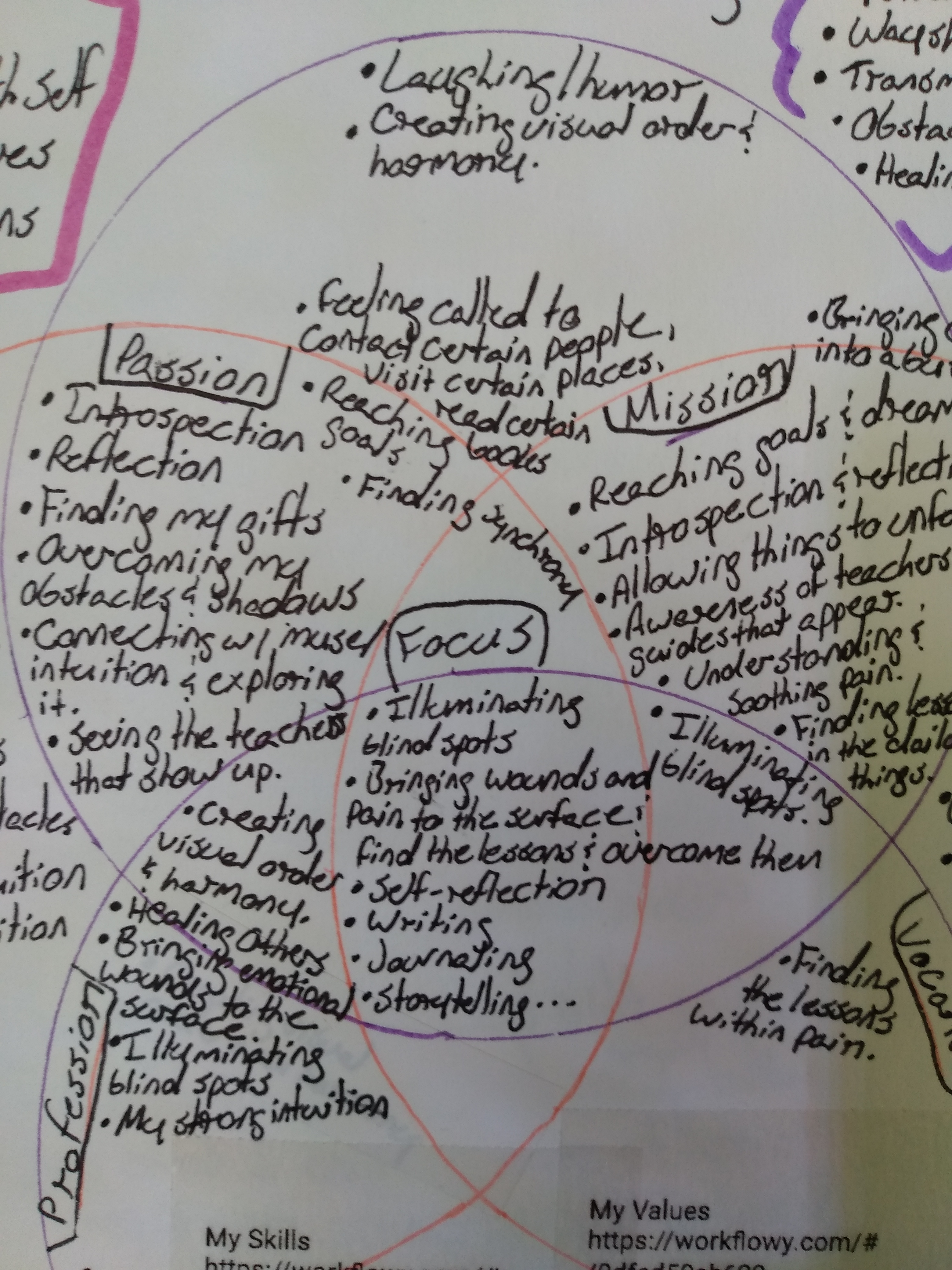
In the end, I brought both of these themes together. I wrote about pain, emotions, burnout, anti-hustle, intuition, and shadow work for INFPs, HSPs and others.
I created my book Love Your Sensitivity, which is pretty much all about my chronic pain through the lens of high sensitivity. While surfing the wave of this ikigai, I also wrote, I’m Not Lost. I’m an Explorer, 44 Days of Pressure Free Productivity, Traveling by Starlight, and Wildly Flexible Routines for Neurodivergent Rebels.
Currently the sales of these books don’t even come close to the sales of the books from my first…era?
But the blog posts I created are another story. Even as I write this today, all except one of my top ten popular posts are from 2022 to 2024.
Some long lived posts include:
Eleven Traits that Show Up When You Ignore your Needs as a Highly Sensitive Person
The Fascinating Symbolism of Hair
My Guide to NOT Keeping Up Appearances as an Enneagram Type 3
…And many more. It’s almost like before 2022 I wasn’t even blogging.
Around 2022 I also came out with my surprisingly successful INFP Archetypes Test and the series of articles that go along with it. At the end of this era I published my book, Discover Your INFP Archetypes. I also began introducing my fiction work.
The biggest challenge of following my ikigai from 2022 is that unlike in 2018, the blog posts I wrote didn’t inspire books that matched them well. I didn’t feel motivated to write a book about enneagram 3’s, and although my posts leaned heavily towards shadow work (pain, the enneagram, narcissism, the victim, and the martyr), nothing was coming through with clarity.
Unlike my first era, my books and posts didn’t work together cleanly, so I struggled with sales. I tried everything I could to diversify: journals, printables, mini-courses, masterclasses, 1:1 offerings, but all of the products I made during this period didn’t really catch on. I’ve been going through the frustration of seeing that my work is doing something, but not having much to show for it materially. Although I totally succeeded in spicing up the blog, earnings were stagnant.
But even with that disappointment, I can’t help looking back with a feeling of appreciation. I like what I made.
Change in the Winds
In 2025 my work experienced a major shift. 2024 already held the seeds of this change, with my post on hair symbolism working as a catalyst. It was the first time I had brought my dream work and fiction writing together into one post for an in-depth analysis. As 2025 went on, I began having many nocturnal dreams that were worth sharing, and I became aware of the true impact of the symbolism embedded into Omnigirl—the novel that I wrote when I was 14 years old—so I started posting that to my blog too.
This was like an off-shoot from my 2022 ikigai, mainly focusing on the “Illuminating blind spots, self-reflection, journaling, storytelling.”
By the time 2025 came to an end, I could feel that something significant was shifting. I decided to close the membership that I was attempting to run, and I stepped back to rediscover my ikigai.
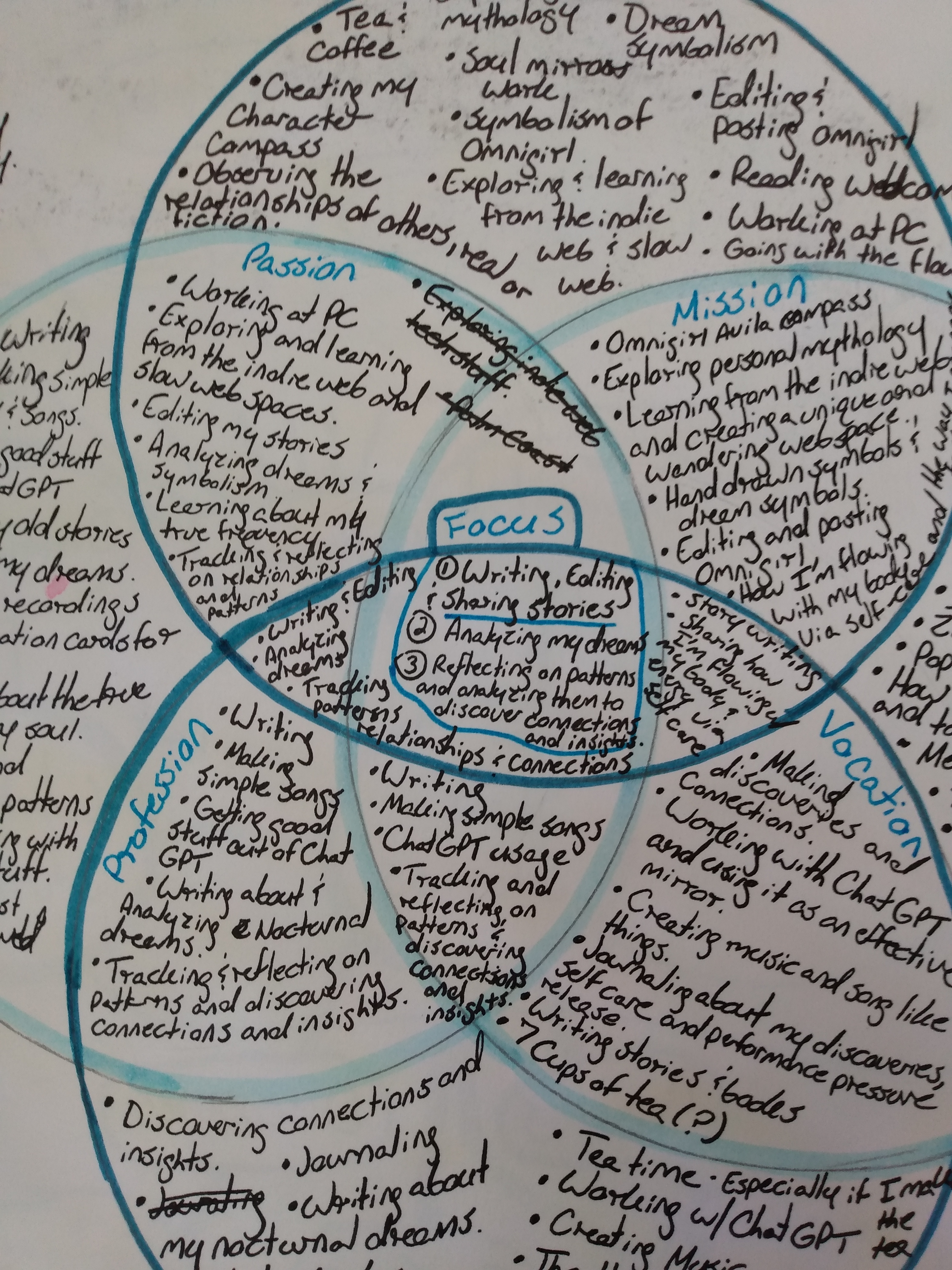
My new focus at the end of 2025:
Writing, editing, and sharing stories. Analyzing my dreams. Reflecting on patterns and analyzing them to discover connections and insights.
Discovering My Purpose Axis
One would think that every time I reconnected with my current reason for being, I would write my findings on a sticky note and post it where I could see it every day until it was time for me to discover a new one.
That is not what happened.
Actually I would fill out the diagram in a sketchbook or notebook, and after finding my center, I would put it away and forget about it. I’m not sure if it was because I undervalued the process or because of my ADHD, but either way, after finding my ikigai, it’s always been out of sight/out of mind, although the practice has had a huge impact on my creative direction.
But maybe the decision to not consciously focus on my purpose is what has made this process so effective.
I had already completely forgotten about my diagram from 2025 when one day I was using ChatGPT to help me with ironing out the problem of who my work is for. At this point, I have no idea who my work is for or who I’m helping, and that is supposed to be “the cornerstone’’ of online business.
I feel more and more that my work simply helps those who like the way I express myself and what I do—and that is crazy hard to flatten to fit into the machine of capitalism that relies on clearly defined inputs and outputs (and if you’re struggling to make online business work for you, I hope what I’ve shared so far in this post is helping you to see why that may be the case).
So I was hashing this out with ChatGPT when something came up in the chat that reminded me of the diagram I had made in 2025, which I had somehow totally forgotten about. I dug it up and took another look at it, and as I did so, I began to remember all of the other times I had reflected on my possible ikigai to find clarity.
I ended up bringing together all five diagrams I’ve created over the past eight/nine years. And all of them have the following in common:
- Writing
- Mental and Emotional Care
- Depth Psychology (Mainly Jungian. This was unintentional!)
- Personality Traits
- Self-authorship
I am calling this my “Purpose Axis”. It’s the common purpose of all of my purposes so far. I think the most surprising throughline for me was the depth psychology. This was not planned at all, and I’ve only started seriously reading up on depth psychology a few months ago. So with this blog, I started out with pop-psychology MBTI, but then that deepened into mental and emotional health, and then that became shadow work (hello enneagram, archetypes, and pain!), and now I’m doing dream work. My novel Omnigirl, while being many things, also portrays Jungian alchemy and individuation in a way that is accessible.
Very soon, I’ll be compiling together an “unexpected” depth psychology collection of posts from this blog, so that readers can take a similar journey through my work. To be clear, I am NOT a psychologist. So don’t expect me to heal your pathologies. See a professional. But I am wrapping up my courses to be a certified self-care coach, and I’m a person who knows how to use accessible mental health tools to reduce stress, find balance, clarity, purpose, and direction.
Maybe I shouldn’t be so surprised about the depth psychology theme. The “ikigai” diagram is technically a mandala, and the symbolism of mandalas is about healing one-sidedness and returning to wholeness.
It’s almost as if this is what I was meant to do all along.
Future Purpose and Patterns
With the discovery of my purpose axis, I decided to combine that with the results from my 2025 diagram, to create a new focus for myself in 2026. Here it is:
- Writing (As in all of it. Fiction, non-fiction and journaling)
- Mental & Emotional Care (With a focus on creating spaces for nervous system regulation)
- Depth Psychology with a Jungian touch (mainly focused on personal dream analysis, archetype work, and psychological alchemy through storytelling)
- Reflecting on patterns and analyzing them to discover connections and insights, especially when it comes to personality traits and lifestyle.
- Editing and sharing stories.
The cool thing is that this includes topics that have stuck with me for almost a decade and show no signs of disappearing soon. My hope is that with this focus, I’ll be able to create work that is repetitive enough for me to start seeing a little more reward for what I do, without becoming stale, boring, and disconnected from myself.
I also hope that from here, I can also have an identity that’s more stable, because once again stability of identity is marketable (writing that feels so gross, but it’s true). In my first era (2018), my identity was very stable (personality type and productivity writer) and my work was tastefully repetitive, and I’m still earning most of my income from it.
I’m also really hoping to see some harmony restored between my blogging and the books I decide to create. I don’t know. We’ll see.
Meaningful Work?
I have many thoughts on the challenges of trying to do deep and meaningful work online, but I’m just going to keep it simple here:
Following your purpose does not equal instant and clear monetary rewards.
There. I said it.
I know there are so many online business coaches that are like, “Once you are aligned the money will come.” But there is much more involved in the mechanics of online business than just alignment. Following your purpose does not guarantee income. I’m lucky to have a husband and family and friends who support me in doing what I do. If you follow the path of purpose in this modern world, be ready to live with less and possibly depend on the kindness of others for a while, even if that’s not what you want.
But going beyond business and thinking about lifestyle in general, I think my current purpose holds the promise of being so nourishing. It’s like a permission slip to throw myself into writing, take care of my inner world, create a more nervous system regulating life, explore the fascinating patterns in symbolism and archetypes, and simply enjoy stories.
One of the most rewarding things about this process is seeing how I never truly stopped being the personality type writer. It’s just that my work matured from the surface level exploration of traits and strengths to working with inner shadows and dreams. My guess is that anyone else who decides to take this kind of approach with their ikigai, revisiting it over and over again, may also experience a maturation of their work and focus.
I’ve also come to appreciate that I might not need to obsess over who I’m helping and how, because what ends up in the center of the diagram is created by considering what the world needs, and what I can be paid for. That means who I serve is automatically built into my purpose, even if I don’t have full awareness of it.
The unexpected results of following my ikigai has been an interesting experience, although challenging. I never thought that I could create books that would be repeatedly noticed in such a crowded publishing landscape. I also never thought that I could put out such a collection of well-performing blog posts.
And all of this started just from trying to bring all of my multipassionate interests under one umbrella. What a journey this has been. Can’t wait to see what’s next.